
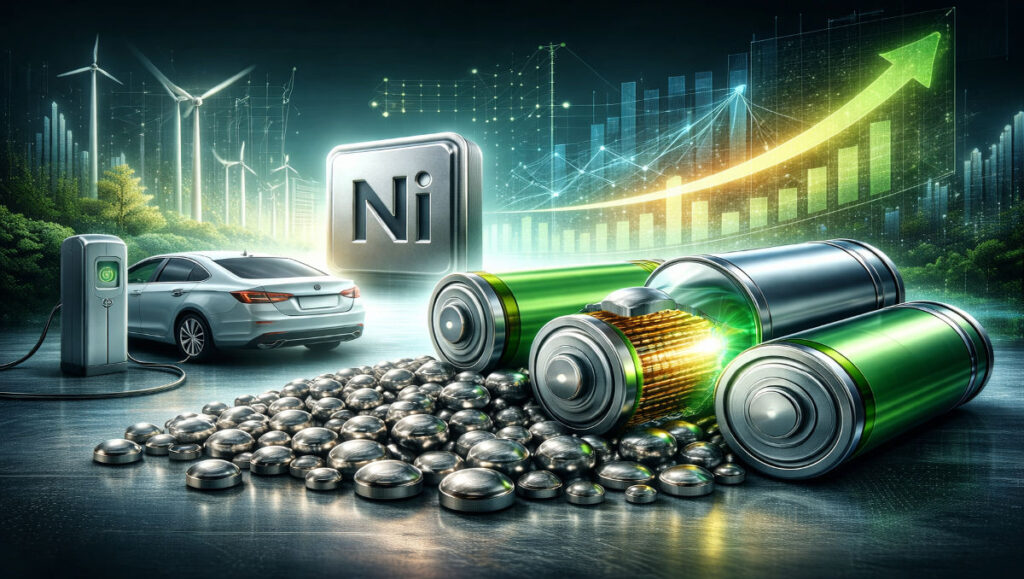
Nickel is crucial for EV batteries because it directly increases energy density, extends vehicle range, and improves battery performance. As electric vehicle adoption accelerates across the United States and globally, understanding why nickel is crucial for EV batteries has become essential for investors, manufacturers, and policymakers.
Unlike traditional industrial metals used primarily in construction or stainless steel production, nickel now sits at the center of the energy transition. The shift toward electrification has redefined nickel from a cyclical commodity into a strategic battery metal. This guide explains why nickel is crucial for EV batteries, how it shapes future demand, and what it means for U.S. markets through 2030.
Table of Contents
- Why Nickel Is Crucial for EV Batteries
- How Nickel Improves Battery Performance
- Nickel Demand Outlook Through 2030
- Global Supply Risks and Production Trends
- U.S. Market and Investment Implications
- Risks to the Nickel Demand Thesis
- Frequently Asked Questions
- Final Thoughts: Nickel’s Strategic Role
Key Takeaways
Nickel is crucial for EV batteries because it increases energy density and reduces cobalt dependency.
High-nickel chemistries dominate premium electric vehicle segments.
Battery-grade nickel demand is growing faster than traditional stainless steel demand.
Supply concentration in Indonesia increases geopolitical risk.
Technology shifts and recycling could reshape long-term demand dynamics.
Why Nickel Is Crucial for EV Batteries
Nickel is crucial for EV batteries because it forms a core component of lithium-ion battery cathodes used in electric vehicles. Most high-performance EVs rely on nickel-rich chemistries such as NMC (Nickel-Manganese-Cobalt) and NCA (Nickel-Cobalt-Aluminum).
These chemistries use nickel to increase energy density, allowing batteries to store more energy per unit of weight. Higher energy density translates directly into longer driving range, which remains one of the most important factors influencing consumer EV adoption.
In practical terms, more nickel enables automakers to build lighter battery packs with longer range. That performance advantage is one of the main reasons why nickel is crucial for EV batteries in modern electric vehicles.
Research from the U.S. Department of Energy shows nickel-rich cathodes improve battery performance and range.
Nickel demand is closely tied to lithium markets, especially as battery chemistry evolves toward higher energy density. For a deeper look at battery supply trends, read our guide on Top 5 Lithium Stocks for Electric Vehicle Growth.
How Nickel Improves Battery Performance
Nickel improves battery performance in several structural ways.
First, higher nickel content increases energy density. This allows EVs to travel further on a single charge without increasing battery size significantly.
Second, nickel helps reduce cobalt dependency. Cobalt is expensive and geographically concentrated, primarily in the Democratic Republic of Congo. By increasing nickel content, manufacturers can lower costs and reduce supply chain risk.
Third, nickel-rich batteries often support competitive charging efficiency and improved vehicle performance. Premium EV models commonly rely on high-nickel cathodes to deliver extended range.
These performance improvements explain why nickel is crucial for EV batteries in higher-end and long-range vehicle segments.
However, higher nickel concentration increases thermal sensitivity, requiring advanced battery management systems to ensure safety and durability.
Nickel Demand Outlook Through 2030
Nickel demand is undergoing structural transformation. Historically, the majority of nickel consumption came from stainless steel production. Today, battery manufacturing is becoming a major incremental driver.
Global EV adoption continues expanding due to:
- Federal EV incentives in the United States
- Infrastructure investment in charging networks
- Emissions regulations
- Corporate electrification commitments
As EV penetration rises, the question of why nickel is crucial for EV batteries becomes central to commodity demand modeling.
Battery-grade nickel demand is projected to grow significantly through 2030. Unlike traditional industrial demand, EV battery consumption is tied to long-term decarbonization trends rather than short-term economic cycles.
This structural shift reduces nickel’s historical dependency on construction cycles and increases its exposure to electrification growth.
Electric vehicles require large amounts of copper for wiring and charging infrastructure. Learn how copper signals broader economic trends in our article on Copper: The “Dr. Copper” Indicator Explained.
Global Supply Risks and Production Trends
Nickel supply is geographically concentrated, creating volatility risk.
Major producers include Indonesia, the Philippines, Russia, Canada, and Australia. Indonesia alone accounts for a significant share of global production, giving it strategic influence over pricing.
Supply risks include:
- Export restrictions
- Environmental regulations
- ESG compliance costs
- Refining bottlenecks
- Battery-grade Class 1 nickel processing constraints
Battery-grade nickel requires higher purity standards than industrial-grade material. This limits substitution flexibility and can tighten supply during periods of strong EV demand.
While production expansion is underway, refining capacity for battery-quality nickel remains a structural constraint.
According to data from the U.S. Geological Survey (USGS), global nickel production continues to rise to meet EV battery demand.
U.S. Market and Investment Implications
For U.S. investors, understanding why nickel is crucial for EV batteries helps identify long-term structural growth themes rather than short-term price fluctuations.
Nickel demand influences:
- EV manufacturers
- Battery producers
- Mining equities
- Commodity ETFs
- Infrastructure-related industries
Nickel prices respond to global manufacturing data, Chinese industrial demand, and U.S. Federal Reserve policy decisions.
Because nickel sits at the intersection of industrial growth and electrification, it functions as both a cyclical and structural commodity.
Investors evaluating energy transition portfolios should consider nickel’s dual exposure to industrial expansion and battery demand growth.
Risks to the Nickel Demand Thesis
Although nickel is crucial for EV batteries today, several risks could influence future demand.
Battery chemistry innovation represents one key uncertainty. Some automakers are increasingly adopting Lithium Iron Phosphate (LFP) batteries, which do not require nickel. If LFP technology gains broader adoption in premium segments, nickel intensity per vehicle could decline.
Oversupply risk is another factor. Rapid expansion in Indonesian production may create temporary supply surpluses.
Recycling growth may also reduce reliance on primary mining output over time. As EV fleets mature, recycled battery materials could supplement demand.
Finally, global economic slowdowns can temporarily reduce industrial demand, affecting nickel pricing.
Despite these risks, long-term structural electrification trends continue to support nickel demand growth.
While nickel benefits from industrial growth, investors seeking defensive exposure often consider Gold as a Hedge Against Inflation during uncertain economic cycles.
Frequently Asked Questions
Why is nickel used in EV batteries?
Nickel is used in EV batteries because it increases energy density and extends driving range. This is a primary reason why nickel is crucial for EV batteries in long-range electric vehicles.
Will EV demand increase nickel prices?
If EV adoption continues expanding faster than supply growth, structural upward pressure on battery-grade nickel prices is possible over time.
Can EV batteries work without nickel?
Yes. LFP batteries do not use nickel. However, many high-performance EV models rely on nickel-rich chemistries for superior range.
For more insights on energy transition metals and macro trends, explore our full Commodity Market Analysis section.
Final Thoughts: Nickel’s Strategic Role in the EV Future
Nickel is crucial for EV batteries because it enables higher energy density, competitive range, and scalable battery production. As electric vehicle adoption accelerates in the United States, the strategic importance of nickel continues to expand.
Understanding why nickel is crucial for EV batteries allows investors to distinguish short-term price volatility from long-term structural demand. While risks such as oversupply and chemistry innovation exist, nickel remains central to high-performance EV battery design.
As the global energy transition advances, nickel’s role in electrification ensures it will remain a critical commodity shaping future demand dynamics.
Author Bio
US Commodity Team specializes in U.S. commodity markets, macroeconomic analysis, and structural energy transition trends. Our research focuses on metals, energy, and global supply-demand dynamics impacting long-term investment decisions.
Investment Disclaimer
This article is for informational purposes only and does not constitute investment advice. Commodity markets are volatile and involve risk. Investors should conduct independent research or consult a licensed financial professional before making investment decisions.
