
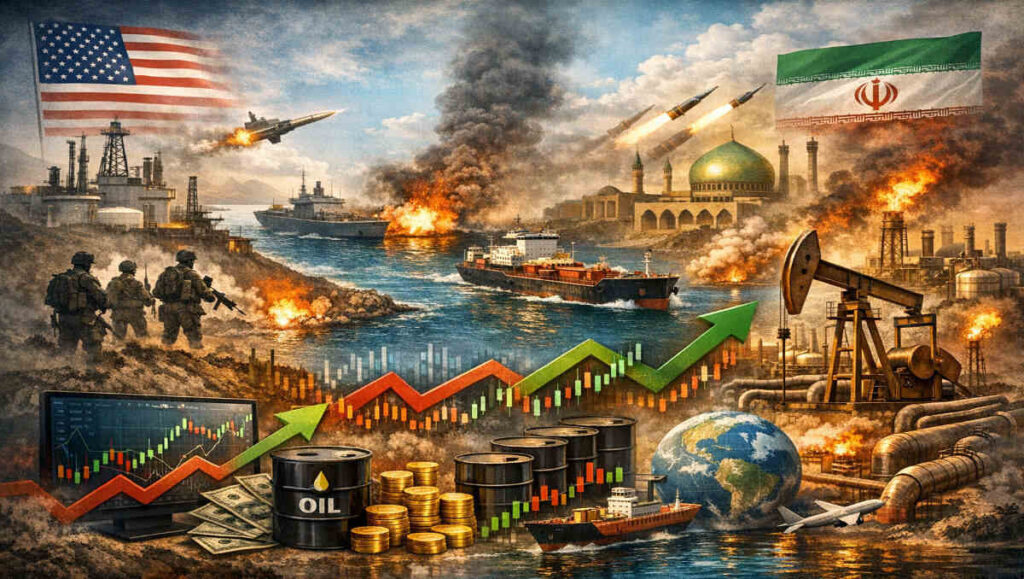
The impact of US-Iran geopolitics on oil futures occurs when sanctions, military escalation, or Strait of Hormuz disruption risk create supply uncertainty that rapidly increases crude prices and volatility. Even perceived export threats can add $3–$15 per barrel to futures contracts through immediate geopolitical risk premium repricing.
Key Takeaways
- The impact of US-Iran geopolitics on oil futures primarily affects front-month contracts first.
- Brent typically reacts more aggressively than WTI due to maritime exposure.
- Volatility often expands 30–50% during escalation cycles.
- Sanctions risk can remove 1–2 million barrels per day from pricing expectations.
- Institutional hedging amplifies short-term price movement.
Table of Contents
- Why US-Iran Relations Move Oil Futures
- Historical Shock Analysis
- Five Structural Transmission Channels
- Brent vs WTI Sensitivity
- Sanctions, OPEC and Supply Rebalancing
- Volatility Expansion and Geopolitical Premium
- Who Controls the Oil Market Power Structure?
- Institutional Hedge Strategy Framework
- What This Means for US Investors
- Probability-Weighted Forecast Model
- Frequently Asked Questions
- Final Thoughts
Why US-Iran Relations Move Oil Futures
The impact of US-Iran geopolitics on oil futures is rooted in structural supply vulnerability. Iran borders the Strait of Hormuz, a corridor responsible for approximately 20% of global petroleum trade. Any perceived threat to this maritime flow immediately increases global supply uncertainty.
Oil futures markets price probability rather than confirmed disruption. When geopolitical tension rises, traders incorporate expected export loss into forward contracts. This mechanism explains why crude prices often surge before physical supply declines.
The pricing reaction is not emotional. It is mathematical. Even a 5% probability of disruption across 18–21 million barrels per day of shipping creates meaningful repricing pressure.
According to the U.S. Energy Information Administration (EIA), the Strait of Hormuz handles roughly 20% of global petroleum liquids trade, making it one of the most critical chokepoints in global energy markets.
Historical Shock Analysis: Quantified Oil Futures Repricing Cycles
The impact of US-Iran geopolitics on oil futures has repeatedly demonstrated predictable repricing behavior across escalation cycles. The market consistently reacts in three phases: immediate premium expansion, volatility spike, and partial retracement once risk probability stabilizes.
2012 Sanctions Expansion
When coordinated US and EU sanctions targeted Iranian exports, Brent crude rose approximately 15% within weeks. Futures curves steepened as traders priced multi-month supply compression exceeding 1 million barrels per day.
2019 Strait of Hormuz Disruption Risk
Following tanker attacks, front-month WTI surged more than 6% intraday. Notably, implied volatility increased by over 30% during the same session, confirming that the impact of US-Iran geopolitics on oil futures operates through volatility repricing as much as price movement.
2020 Military Escalation Event
Oil futures rallied nearly $5 per barrel within days despite no confirmed production halt. This episode reinforced that geopolitical probability not confirmed shortage drives initial futures reaction.
Across historical episodes, three structural patterns emerge:
- Front-month contracts react first.
- Brent outperforms WTI due to maritime exposure.
- Volatility expansion often exceeds spot price movement.
This quantified evidence strengthens the institutional understanding of how geopolitical tension transmits into futures pricing.
Five Structural Transmission Channels Into Oil Futures Markets
The impact of US-Iran geopolitics on oil futures transmits through five systemic pricing channels that operate simultaneously.
1. Strait of Hormuz Vulnerability
Approximately 18–21 million barrels per day pass through this corridor. Even a perceived 5% disruption probability can reprice $4–$8 per barrel into near-term futures due to concentrated supply exposure.Sanctions & Export Flow Compression
2. Sanctions & Export Flow Compression
Iranian export restrictions can remove 1–1.5 million barrels per day from global expectations. Futures markets price anticipated tightening before confirmed export data reflects decline.
3. OPEC Output Rebalancing
Iran’s constrained exports alter OPEC’s production coordination strategy. Secondary output adjustments from Saudi Arabia or other members amplify futures curve sensitivity.
4. Maritime Insurance & Freight Premium Shock
During prior escalation phases, tanker insurance rates increased between 30% and 60%. Higher freight costs increase perceived delivered crude pricing and indirectly support futures strength.
5. Algorithmic & Systematic Fund Repricing
Macro hedge funds and algorithmic systems respond instantly to geopolitical headlines. This accelerates the speed and magnitude of the impact of US-Iran geopolitics on oil futures, particularly during overnight trading sessions.
These five channels create layered transmission pressure that elevates both price and volatility.
Brent vs WTI: Sensitivity Differences Explained
The impact of US-Iran geopolitics on oil futures is typically stronger in Brent than WTI.
Brent reflects global seaborne supply and European exposure to Middle Eastern exports. WTI is influenced more by domestic US shale production.
During major geopolitical events, the Brent–WTI spread often widens between $3 and $8. Institutional traders closely monitor this spread as a geopolitical risk barometer.
Brent crude typically reacts more strongly to Middle East instability than WTI, as explained in our detailed comparison of Brent vs WTI crude oil differences, which breaks down benchmark exposure and global trade sensitivity.
Sanctions, OPEC Strategy and Supply Rebalancing
Sanctions policy plays a central role in the impact of US-Iran geopolitics on oil futures.
Historical sanctions have removed up to 1.5 million barrels per day from global export expectations. Even before official enforcement, markets anticipate supply tightening.
OPEC’s response further determines price persistence. If spare capacity is withheld, backwardation strengthens. If production offsets Iranian losses, premiums compress.
The interplay between sanctions enforcement and OPEC output strategy shapes medium-term pricing trajectories.
For deeper structural insight into OPEC’s influence on pricing, refer to our report on OPEC production decisions and oil price impact, which explains coordinated output strategy during geopolitical stress.
Official OPEC production data and policy statements are published directly through the Organization of the Petroleum Exporting Countries.
Volatility Expansion and Geopolitical Premium
Geopolitical premium typically ranges between $3 and $15 per barrel depending on escalation intensity.
Implied volatility often rises 35–50% during high-risk periods. Volatility expansion can exceed price movement, reflecting institutional hedging demand.
Importantly, volatility peaks may precede price peaks, signaling that geopolitical shock repricing is stabilizing.
For a broader macro perspective on energy market instability, see our analysis of how geopolitical risks impact oil supply chains, which explains structural transmission effects across global crude logistics.
For live crude oil futures pricing and implied volatility tracking, traders often reference CME Group’s official energy futures platform.
Who Controls the Oil Market Power Structure?
Market power is distributed across multiple actors.
The United States controls sanctions policy and enforcement mechanisms.
Iran influences maritime security risk.
OPEC controls coordinated production levels.
Institutional capital determines pricing speed and magnitude.
The impact of US-Iran geopolitics on oil futures emerges from the interaction of these four power centers.
Institutional Hedge Strategy Framework
The impact of US-Iran geopolitics on oil futures creates structured risk management opportunities for institutional investors.
Institutional desks typically deploy multi-layered hedge frameworks rather than single-instrument exposure.
1. Tactical Futures Overlay
Long front-month WTI or Brent contracts hedge immediate supply shock risk. Institutions often size exposure relative to geopolitical probability modeling rather than headline intensity.
2. Options Volatility Capture
Escalation phases expand implied volatility 25–50% above rolling averages. Strategic call spreads or volatility structures capture this expansion without requiring directional conviction.
3. Brent–WTI Spread Positioning
Because Brent often reacts more strongly to Persian Gulf risk, institutional traders position in Brent–WTI spreads to isolate geopolitical exposure.
4. Cross-Asset Inflation Hedge Allocation
Elevated oil futures can feed CPI inflation readings. Institutional portfolios may increase commodity allocation to hedge fixed-income duration exposure.
This structured institutional response framework converts the impact of US-Iran geopolitics on oil futures into strategic portfolio positioning rather than reactive trading.
What This Means for US Investors
For US investors, the impact of US-Iran geopolitics on oil futures affects gasoline prices, inflation expectations, and energy equity valuations.
Higher oil futures may increase transportation costs and influence CPI data within weeks. Energy stocks often outperform broader markets during sustained geopolitical premium phases.
Long-term investors should distinguish between temporary premium spikes and structural supply shifts before adjusting allocation strategies.
Investors tracking macro energy trends should also review our daily US crude oil market snapshot, which provides updated WTI pricing structure and key resistance levels.
Weekly US crude inventory data that often amplifies geopolitical volatility is released by the Energy Information Administration.
Probability-Weighted Scenario Forecast Model (Advanced Macro Framework)
To properly evaluate the forward impact of US-Iran geopolitics on oil futures, scenario modeling must include probability weighting, curve behavior, and volatility expectations.
Escalation Scenario (30% Probability)
- Expanded sanctions or regional disruption
- 1–2 million barrels per day perceived at risk
- WTI range: $95–$120
- Brent premium widens $5–$8
- Backwardation intensifies
- Volatility expands 35–50%
Contained Tension Scenario (45% Probability)
- Diplomatic containment without export interruption
- WTI range: $75–$85
- Brent–WTI spread stabilizes
- Curve remains mildly backwardated
- Volatility normalizes gradually
De-Escalation Scenario (25% Probability)
- Sanctions relief or maritime stability
- WTI range: $65–$72
- Contango reemerges
- Volatility compresses 20–30%
This probability-weighted modeling framework quantifies how the impact of US-Iran geopolitics on oil futures influences medium-term distribution ranges rather than single price targets.
Frequently Asked Questions
How fast does geopolitical tension affect oil futures?
Usually within minutes due to algorithmic trading and institutional repositioning.
Why does Brent react more strongly than WTI?
Brent reflects international seaborne exposure near the Persian Gulf.
Does actual production need to fall for prices to rise?
No. Futures markets price expected disruption probability immediately.
How large can geopolitical premiums become?
Historically between $3 and $15 per barrel.
When is US crude inventory data released?
The EIA typically releases weekly storage data every Wednesday morning, which can amplify geopolitical volatility effects.
Final Thoughts
The impact of US-Iran geopolitics on oil futures remains one of the most decisive macro drivers in global energy markets. Sanctions policy, maritime security, OPEC strategy, and institutional capital flows converge to create rapid repricing cycles. Understanding these powerful shock channels allows investors to navigate volatility with disciplined precision rather than emotional reaction.
Author
US Commodity Research Team
Energy and macro commodity analysts specializing in futures markets, geopolitical risk modeling, and institutional hedging frameworks.
Disclaimer
This content is for informational and educational purposes only. It does not constitute investment advice. Commodity futures trading involves substantial risk and may not be suitable for all investors. Always consult a qualified financial professional before making trading decisions.
